
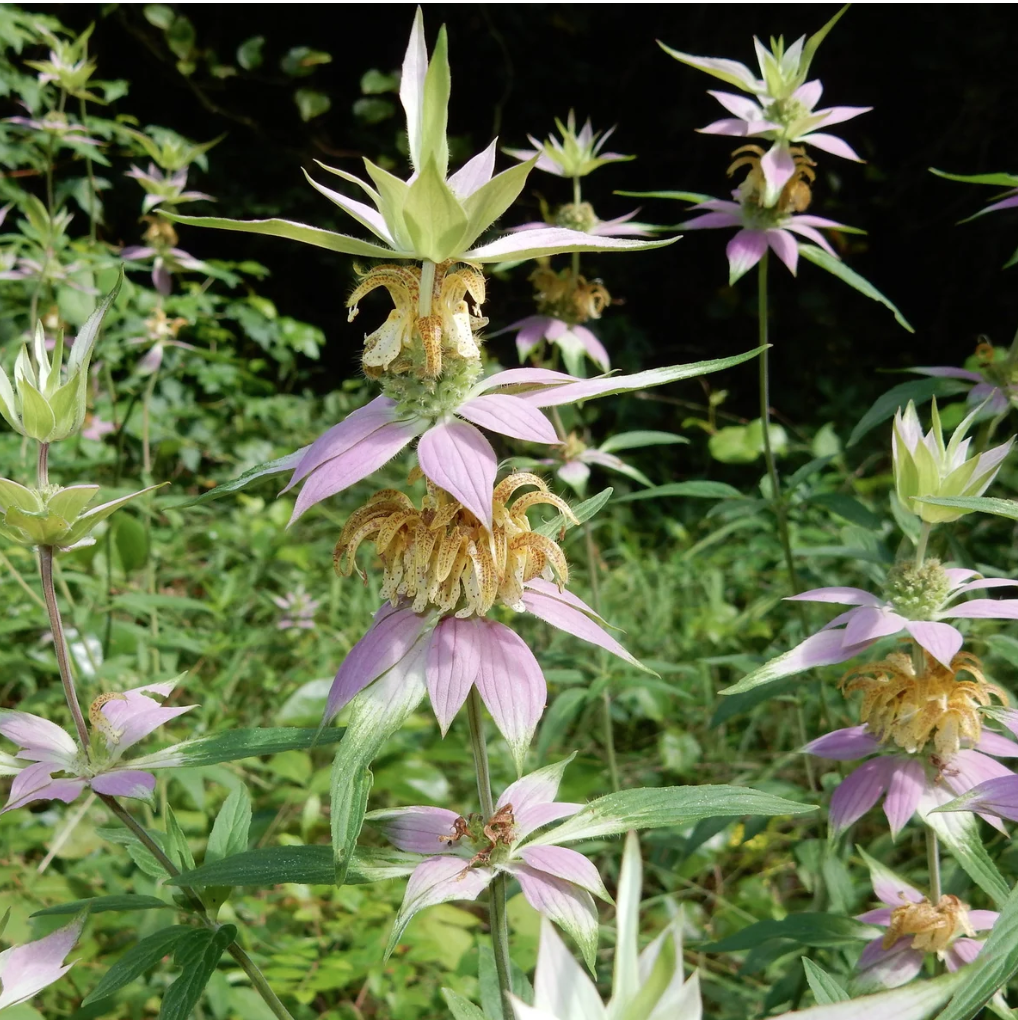
Spotted Bee Balm
monarda punctata
days to maturity:
plant spacing: 1 plant per 2 square feet
sunlight requirements: 6-14 hours
look out for:
harvest notes:
seasons: fall, winter, spring, summer
Spotted bee balm, also called dotted horsemint, is a native wildflower that thrives in hot, sandy soils and is right at home in zone 10b. It produces whorls of purple-spotted, tubular flowers surrounded by showy pink to lavender bracts, giving the plant a unique tiered look. A magnet for pollinators, it’s especially attractive to bees, butterflies, and hummingbirds. Native to much of the eastern and central U.S., spotted bee balm has been used in traditional herbal practices thanks to its high thymol content (the same compound that gives thyme its antiseptic qualities). Teas were once made from the leaves to ease digestion or colds, while poultices were applied to minor wounds. Today, most gardeners enjoy it for its beauty and ecological value, but it’s interesting to know the plant carries this history. Plant in full sun with well-drained soil—once established, it’s drought-tolerant and can reseed itself from year to year. In a pollinator or wildflower garden, spotted bee balm provides both bold color and buzzing activity, along with a cultural tie to traditional herbal use. Our resident herbalist The Garden Jules has wanted us to grow this for a while and once we went to Bok Tower Gardens and saw it thriving in their pollinator meadow we were convinced!