
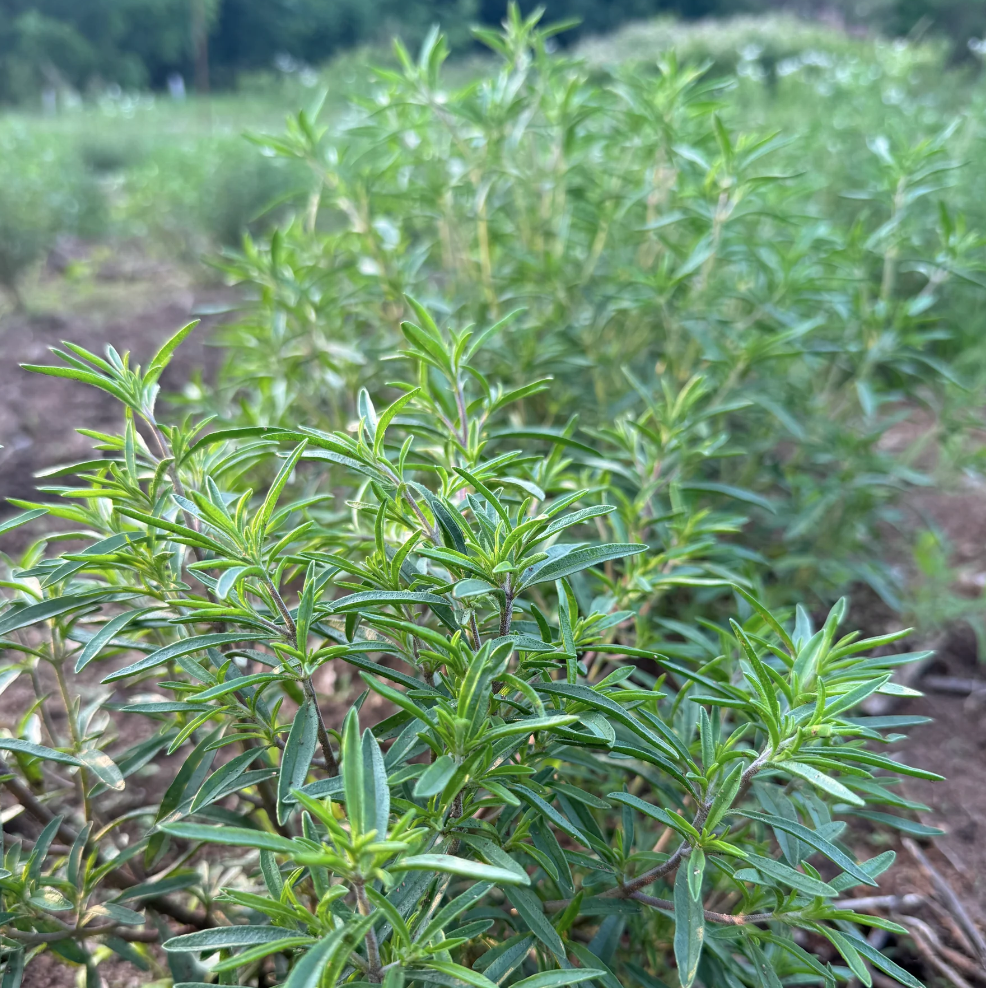
Lebanese Za’atar
Satureja hortensis
days to maturity: 100 days
plant spacing: 1 per square foot
sunlight requirements: 6-14 hours hours
look out for: overwatering causing rotting
harvest notes: grab a little clump of growing tip and cut with pruners
seasons: fall, winter, spring and summer
perennial
Lebanese Za’atar (also called savory) is an herb with deep roots in Middle Eastern tradition, and it brings both flavor and history to the garden. This hardy perennial is closely related to oregano and thyme, with a robust, slightly tangy taste that forms the base of the famous spice blend also called “za’atar.” Mixed with sesame seeds and olive oil, it becomes a beloved staple for dipping bread, seasoning meats, or sprinkling on roasted veggies. In our warm zone 10b climate, za’atar is right at home. It thrives in full sun, sandy and well-drained soil, and doesn’t mind the heat or a little neglect—too much water is actually its enemy. Once established, it’s drought-tolerant and easy to keep tidy with occasional pruning, which also encourages fresh, flavorful growth. Beyond the kitchen, za’atar has been valued for centuries as both food and medicine. In traditional Lebanese households, it’s known as a nourishing, brain-boosting breakfast when eaten with bread and olive oil, and herbal teas made from it are sometimes sipped to ease colds and digestive troubles.