
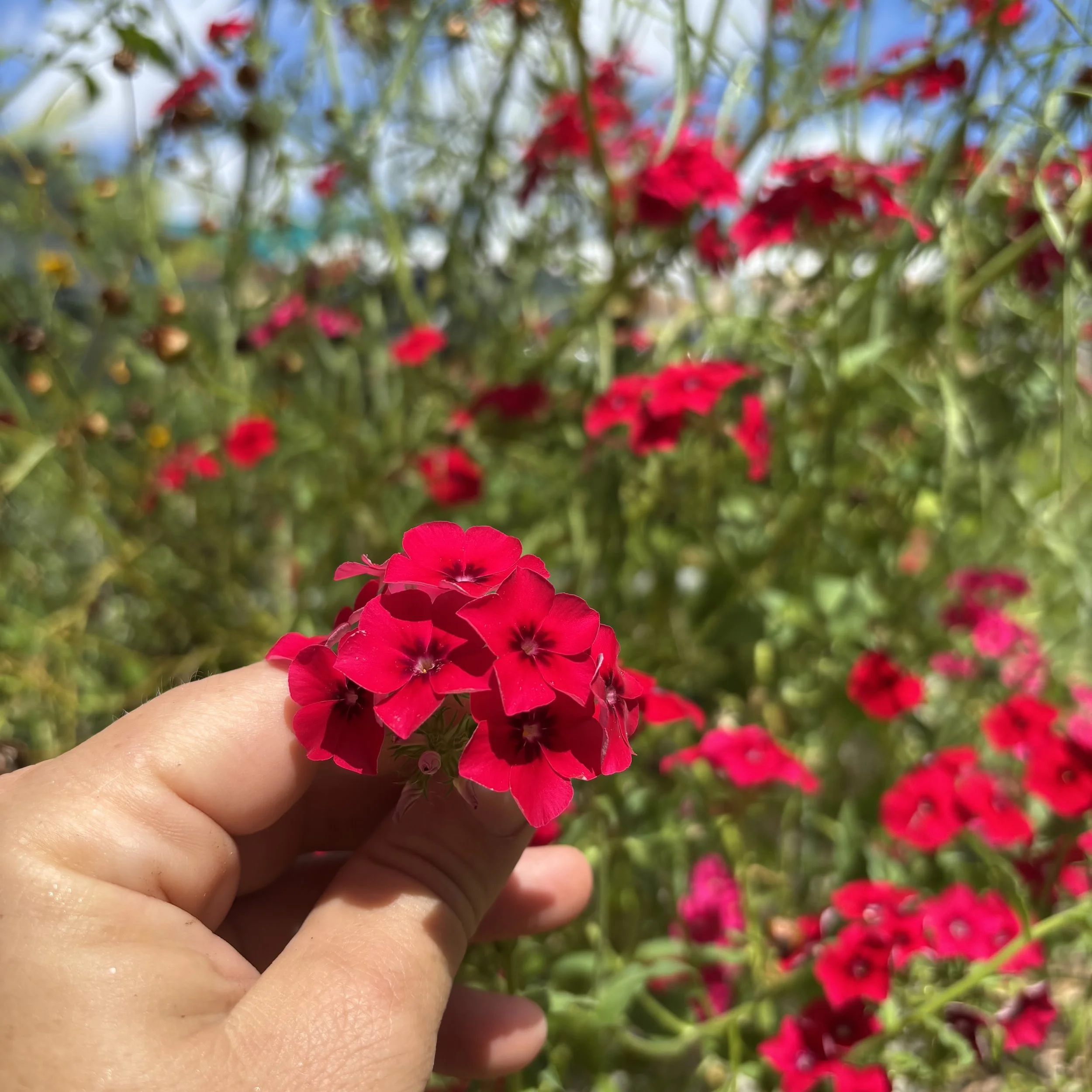
Annual Phlox
phlox drummondii
days to maturity: 60 days
plant spacing: 1 plant per square foot
sunlight requirements: 8-14 hours
look out for:
harvest notes: harvest as needed. not edible
seasons: fall, winter, spring
We fell in love with phlox when we star ted noticing it popping in the DOT roadside wildflower plantings that run up the turnpike in the medians and swales. This is a State initiative where wildf lower meadows are planted in roadsides instead of grass, which we love! The plantings are predominantly coreopsis and phlox. Phlox are classic garden f lowers valued for their clusters of bright, star-shaped blooms in shades of pink , purple, red, and white. In our zone annual phlox varieties are the best f it, as they handle heat better than their perennial cousins. Plant them in fall through early spring for strong performance, giving them full sun to partial shade and well- drained soil enriched with compost. They need regular watering but dislike soggy conditions. With proper care, phlox will bloom generously, attracting butterflies and hummingbirds. Their long-lasting flowers make them a favorite for cut ting gardens, and they provide a lush, cottage style look in borders or containers.